Purposive Action
We have discussed the gravity of the thermodynamic problem we collectively face. Attractors are pulling toward strategies that are brittle and prone to failure. Now, we must detail what can be done in response. Purposive action is the disciplined practice of building capacity, relationships, and feedback loops at every scale.
This is the part of the framework that describes where we as individuals can exercise agency to build resilient systems. It involves three broad strategies: polyculture, praxis, and polycentricity. With these strategies in mind, we can construct purposeful action scaffolds from the individual to international levels.
While historical evidence supports the simplification of complexity with declining net energy throughput, there is also evidence that choices made prior to stressors help determine reorganization outcomes. In other words, act as if it matters because the cost of being wrong in the direction of action is low, and the cost of being wrong in the direction of inaction is not.

Redundancy → Polyculture
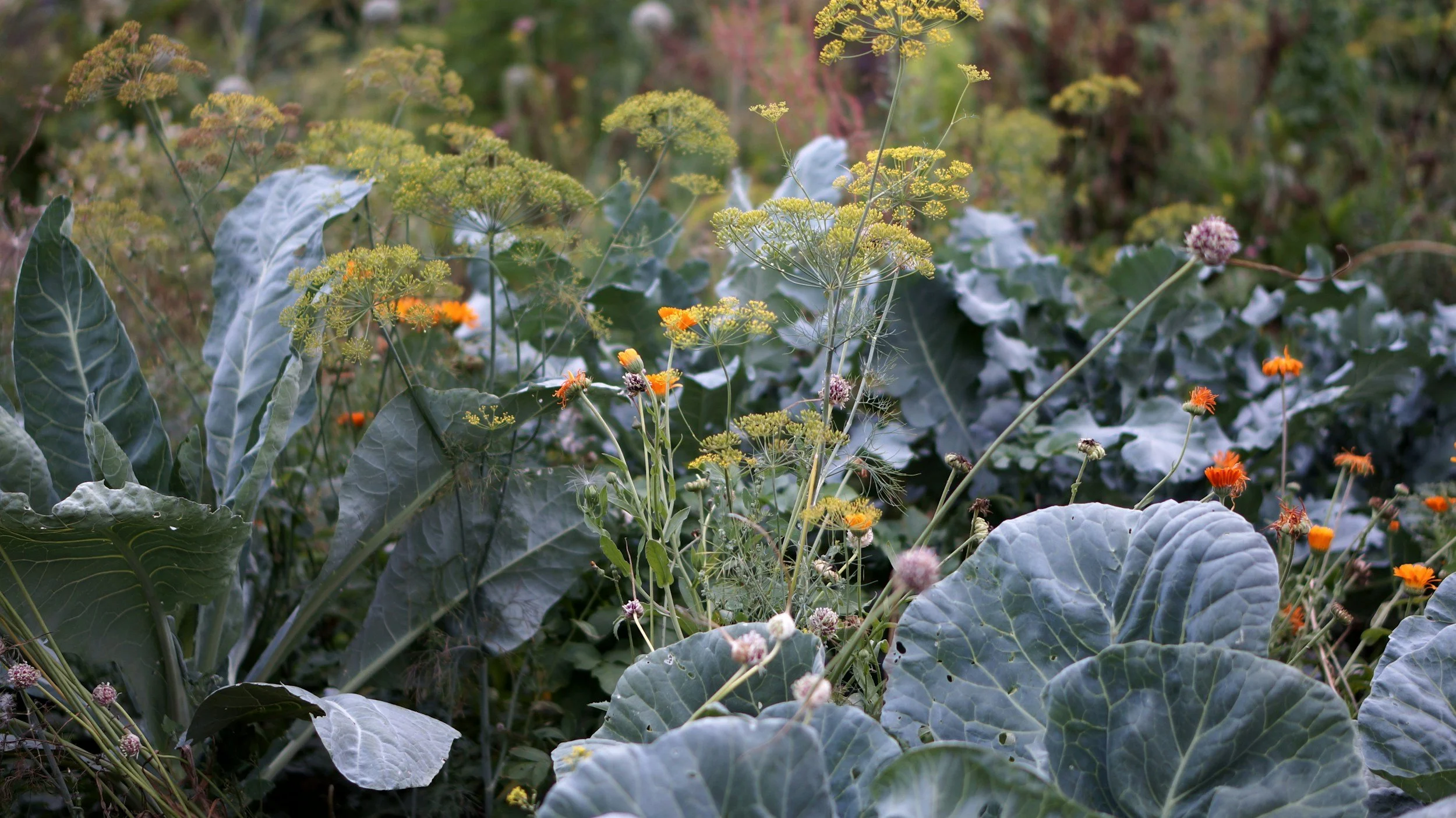
Diversify everything. Skills, food sources, income streams, relationships, knowledge. Monocultures, whether of crops, of thought, or of livelihood are precariously fragile. Polyculture is the practice of deliberate diversity at every level.

Reflexivity → Praxis
Act, observe, revise. Reflection and action upon the world in order to transform it, neither purely with activism nor theory. The discipline of letting consequences teach you, then acting again in light of this new information.

Relational Trust → Polycentricity
Distributed nodes. Build webs of interdependence that don't collapse when any single point fails. Power, food, care, knowledge: none of it should go through a single source. Polycentricity is Elinor Ostrom's insight applied to daily life.
The Scales of Action
Scale Zero
Every scale of purposive action described in this framework depends on a substrate: a person capable of sustained, reflective, relational engagement with difficult reality. That capacity requires building and maintaining like any other system, through inputs, cycling, and deliberate design.
The thermodynamic framing is not metaphorical here. A body running on chronic sleep deficit, nutritional depletion, and unprocessed stress is a system operating below its energy budget. It cannot generate the surplus required for purposive action. What it generates instead is reactive motion, which creates the appearance of action without the feedback loop that makes action purposive.
The attractor dynamics described elsewhere in this framework operate on the individual as much as on civilizations. Fear, exhaustion, and overwhelm are attractors. The interior work of Scale Zero is the practice of maintaining enough stability to resist those attractors. Not through denial of the reality that generates them, but through deliberate cultivation of the capacity to hold that reality without being consumed by it. Psychological numbing and genuine equanimity look similar from the outside and are entirely different from the inside. Numbing is dissociation from reality. It protects the self at the cost of accurate perception. Equanimity is the capacity to perceive accurately without being destabilized by what is perceived. The first forecloses purposive action. The second is its prerequisite
Somatic Infrastructure
The body is not separate from the capacity for purposive action.Sleep, movement, and nutrition are the physical substrate on which everything else runs. Chronic depletion at this level forecloses the higher-order capacities regardless of intention.
Sleep is non-negotiable - Cognitive function, emotional regulation, and immune competence all degrade measurably with chronic sleep deficit
Movement as regulation - Physical activity is one of the most significant interventions known for stress regulation, anxiety, and depressive symptoms.
Nutrition - Micronutrient deficiency, such as B12, vitamin D, iodine, and magnesium produces cognitive and emotional symptoms that are frequently misattributed, and should be considered.
Reduction of inflammatory inputs- chronic alcohol use, ultra-processed food, and sedentary behavior are physiological stressors layered on top of whatever situational stress already exists. This tends to compound stressors.

Relational Regulation
The nervous system is a social organ. Human beings regulate physiologically through relationship. Co-regulation is not a metaphor, but rather a documented biological mechanism. Isolation under stress does not produce resilience. It produces dysregulation and distorted perception. Community is nervous system regulation infrastructure.
Maintain relationships that predate the framework - People who knew you before you understood what you now understand are an anchor. Their ordinariness is not a deficiency, but rather a tether to the full range of human experience.
Find even one person who can hold the full picture - The experience of being genuinely understood by another person who is not destabilized by what you're carrying is a specific and powerful form of regulation. It does not require agreement, it just requires presence.
Reciprocal care as practice - Being needed and being useful to others is a healthy source of meaning and psychological stability. The orientation toward others that polycentricity requires is also a regulation strategy.
Avoid epistemic isolation- Communities organized entirely around a single framework, however accurate it may be, develop distorted perception over time. Remain permeable to people and experiences that don't conform to what you already know.


Clinicians who work at the edge of mortality understand this distinction professionally. It requires the capacity to sit with a dying patient, hold the full weight of what is happening, and remain present and useful. Neither giving into false hope nor collapsing into the patient or family’s despair is a trained and practiced skill. It does not arise naturally. It is built through repeated exposure, reflection, supervision, and care for one's interior state.
The situation described by this framework requires something similar of anyone who engages with it seriously. The Great Acceleration data, the thermodynamic constraints, the attractor dynamics are all based on observed evidence. Engaging with that reality fully, without either denial or despair, is a capacity that must be deliberately cultivated. Scale Zero is the practice of cultivating it.

Epistemic Stability
This is the capacity to hold difficult knowledge without either denying it or being paralyzed by it. This is both cognitive and emotional at the same time. It requires practice, rather than willpower, through repeated exposure to hard truths in contexts of sufficient safety, until the nervous system learns that knowing does not equal dying.
Graduated exposure to difficult material - Engaging with collapse-adjacent literature and data in measured doses, with adequate integration time, is qualitatively different from binge-reading until overwhelm. Stability requires pacing. Reduce addiction to outrage/doomscrolling.
Distinguish signal from noise - Not every alarming headline requires a response. Developing the capacity to determine what requires action, what requires attention, and what can be set aside, is itself a skill. Undiscriminating alarm is a depletion mechanism.
Tolerate uncertainty without resolution- Many of the most important questions in this framework cannot be answered with certainty. The capacity to act under uncertainty without needing false resolution is foundational to purposive action.
Grief as information - the appropriate response to genuine loss, whether thats loss of stability, of certainty, or of futures that will not arrive, is grief, not problem-solving. Grief that is allowed to move through tends to complete. Grief that is suppressed or bypassed compounds.

Meaning Architecture
Sustained action over long timescales, the kind that systemic change requires, is not maintained by urgency by itself. Meaning is what sustains a multi-decade practice. The work of Scale Zero includes deliberately cultivating the sources of meaning that make purposive action feel worth continuing when outcomes are uncertain and results are slow.
Process-orientation over outcome-orientation - Outcomes at the scales this framework addresses are not within individual control, but the practice is. Orienting toward the quality of engagement rather than the guarantee of results is not resignation. Its calibrating towards a goal.
Beauty as necessity- Attention to beauty, in the natural world, in craft, in relationship, and in thought is not a luxury indulgence. It is one of the primary mechanisms by which human beings sustain engagement with difficult work over time. Beauty creates the sense of awe worth saving, and neglecting it is a resilience error.
Locate yourself in a longer story - The civilizational transition underway is not unprecedented in kind, only in scale. Locating current events within the longer arc of human and ecological history through Tainter, evolutionary deep time, or indigenous cosmologies, is a meaning-generating practice.
Work that is its own reward- Praxis, in Aristotle's formulation, is action whose end is contained within itself. Building soil, tending relationship, developing competency, teaching what you know - these have intrinsic value regardless of systemic outcome.
Meaning architecture may involve education redesign, art, grief, storytelling, connection to place, rituals & belonging, and narrative control taht is not algorithm driven.
Despair and Grief Are Not the Same
DESPAIR
A cognitive and emotional state that forecloses action by concluding that action is futile. It is frequently mistaken for clear-sightedness.Despair is a specific attractor which has the form of realism but the function of paralysis. It is the interior equivalent of the authoritarianism attractor: a collapse into a stable but low-complexity state that requires no further effort or engagement.
GRIEF
An appropriate response to real loss. Grief for futures that will not arrive, for people who will be harmed, for ecosystems already lost. This is accurate perception, not dysfunction. Unlike despair, grief that is allowed to move through tends to restore rather than foreclose capacity. It is the emotional form of praxis: it processes reality and returns the system to function.
The capacity to grieve without despairing is one of the most important skills this situation requires. It is also one of the most countercultural in a civilization that pathologizes sadness and celebrates relentless positivity. Purposive action does not require hope in the sense of confident expectation of good outcomes. It requires only the continued choice to engage: to do the next available thing, observe what it produces, and do it again.
The Continuity Problem
One failure mode of this framework and of collapse-adjacent thinking generally is what could be called the continuity problem: the difficulty of maintaining ordinary life, ordinary relationship, and ordinary pleasure alongside the weight of what you understand. This is a condition to be inhabited rather than a problem to be solved as it has no easy reconciliation. The person who can hold thermodynamic reality in one hand and a meal with friends in the other is not compartmentalizing, but rather they are practicing the full range of human experience, which has always included both genuine darkness and beauty simultaneously.
The goal of Scale Zero is not to pretend the darkness doesn’t exist but to build the interior capacity to hold both without being consumed by either. To remain a fully relational ,embodied person capable of pleasure and grief and sustained purposive action, all at once. That person is the substrate on which everything else in this framework depends.
Scale One - The Individual
You are the first node. What you know, what you can do, and who you trust determines everything downstream.
POLYCULTURE
Learn a manual skill- Fermentation, basic carpentry, food preservation, first aid, seed saving. Competency is the most portable asset.
Diversify your food knowledge - Learn to identify common wild edibles in your region. Learn to sprout, ferment, and preserve without refrigeration.
Build physical capability - Strength, endurance, and manual dexterity are forms of resilience. Avoid pharmaceutical dependency for manageable conditions where possible.
Read outside your field - Systems ecology, history of collapse, appropriate technology, permaculture design. The generalist has more leverage than the specialist under stress.
Reduce consumption complexity - Every unnecessary dependency is a fragility. Audit what you actually need versus what the system has convinced you that you need.
Learn about physical survival systems - energy (local, resilient), food & water (local, redundant, regenerative), housing (efficient, adaptable), medicine (less global dependency), transport (less fuel reliance), communication (decentralized)

POLYCENTRICITY
Map your actual network - Who would you call in a real emergency? Who has skills you don't? Who trusts you? The honest answer to these questions is a starting point.
Become a node others can reach - Reliability and competence make you valuable to a network. Be the person who shows up, follows through, and knows something useful.
Reduce financial dependence- Every reduction in fixed monthly obligation increases your degrees of freedom.
Establish multiple income streams - Even small secondary income creates margin. Margin is what allows purposive action when the primary system stresses.
PRAXIS
Keep a practice log - What did you try? What did it produce? What will you do differently? The feedback loop is the practice. Without observation, action is just motion.
Sit with difficult knowledge - The thermodynamic situation is what it is. Denial and despair are both failure modes. The capacity to hold hard truths without dissociation is itself a skill that can be developed.
Act at the edge of your comfort- Praxis requires risk. Small consistent actions at the edge of what you know how to do compound into genuine capability over time.
Name what you're doing and why - Articulating your reasoning to yourself and others is not vanity. It is how you refine the theory that guides the next action.
An entry point:
If you are in an apartment with no land and little slack: learn one preservable skill this month. Tell one person why you're learning it. The person you told is now a node

POLYCENTRICITY
Skill-share with adjacent households - What can you teach? What do you need to learn? Formal skill exchanges or just honest conversation.
Tool libraries and shared assets- A grain mill, a canner, a chest freezer, these may make more sense shared among four households than owned by one. The sharing relationship is the point, not just the economics.
Know your neighbors by name- This is the lowest-stakes highest-leverage resilience action available to almost everyone. Social trust between adjacent households has historically been the difference between crisis survival and crisis collapse.
Reduce outsourced care - Cooking from scratch, basic home repair, childcare exchange. Each reclaimed function reduces dependence on external systems.
PRAXIS
Run household simulations - What would a 72-hour grid outage actually require, say in a natural disaster scenario? Walk through it before it happens. The gaps you find are your next actions.
Involve children deliberately- Children who grow up knowing how to ferment, preserve, and repair are prepared, not deprived. These are also profound sources of meaning and competence.
Review and revise annually - What did you actually use from the pantry? What skills did the household genuinely need? Let real experience revise the preparation, not anxiety
An entry point:
Buy a 25-lb bag of dried beans and a 25-lb bag of rice. Learn one recipe that uses them well. Invite a neighbor to eat it. You have just practiced all three P nodes simultaneously.
Scale Two - The Household
The household is the primary production and care unit in every resilient society. Industrial modernity outsourced its functions. Purposive action begins reclaiming them.
POLYCULTURE
Build a working pantry - 3–6 months of caloric staples: grains, legumes, fats, salt, ferments. Not as panic hoarding, but as normal household practice that predates the supermarket.
Grow something edible - A window box of herbs. A five-gallon bucket tomato plant. A jar of sprouts on the counter. The yield is almost irrelevant. The competency and relationship with food production is the purpose
Water independence at any scale - A Berkey filter. A rain barrel if possible. WaterBrick storage. Learn about your municipal source and its vulnerabilities.
Medical self-sufficiency- First aid capability. Basic pharmaceutical stockpile for known conditions. Knowledge of which conditions are manageable without professional infrastructure, and which are not.
Energy margin - A power bank. A solar charger. A way to cook without the grid. Consider the baseline capabilities that most of us take for granted.

POLYCENTRICITY
Mutual aid networks - Formal or informal: who checks on whom during a heat wave, who shares what during a crisis, who provides childcare when systems fail. These networks already exist in many neighborhoods and are almost never mapped or strengthened until needed.
Block-level emergency planning - CERT training. Neighborhood communication trees. Knowing where the elderly, the disabled, and the medically dependent live before a crisis, not during one.
Local currency and exchange systems - Time banks, skill swaps, local gift economies. These are historically normal and they build exactly the relational trust that polycentricity requires.
Faith and cultural institutions - Every functioning religious and cultural community is already a polycentric node. Engage them where they exist. They have infrastructure, networks, and reach that secular organizing typically lacks.
PRAXIS
Host skill-sharing events - One evening of fermentation or first aid training builds capability and maps the network simultaneously. The conversation afterward is as valuable as the skill.
Document what works - Which mutual aid structures actually activated when needed? Which were theoretical? Honest assessment of neighborhood resilience is itself a community practice.
Low-stakes practice events - Neighborhood dinners, work parties, skill swaps. These are practice at cooperation and collective action, themselves capacities that atrophy without use and cannot be summoned on demand.
Entry point:
Host a single event: a seed swap, a skills afternoon, a neighborhood dinner. Frame it as pleasurable. Don't lead with collapse theory. The framework can come later. The relationship comes first.
Scale Three - The Neighborhood
The neighborhood is where social capital becomes material. Trust developed in ordinary times becomes the infrastructure that holds in extraordinary ones.
POLYCULTURE
Community gardens and food production- Even small plots collectively managed can produce significant amounts of food and, more importantly, real relationships and shared competency.
Skill inventories - Who in your neighborhood is a nurse, a mechanic, a carpenter, a farmer, a midwife? Most neighborhoods contain extraordinary capability that is invisible because no one has asked.
Seed libraries and plant exchanges - Localized plant knowledge, such as what grows here, what performs, what saves well, is irreplaceable and almost entirely distributed through social networks.
Repair cafés and maker spaces - Repair as community practice. The object repaired is almost secondary to the relationship built and the learned-helplessness reversed.
Scale Four- The Community
At community scale, individual action becomes institutional. The question shifts from what you can do to what structures you can build that outlast individual effort.
POLYCULTURE
Community land trusts - Permanently affordable land held in trust for community use. Removes land from speculative markets. This is a design already operating in hundreds of communities.
Local food systems - CSAs, food hubs, gleaning networks, food forests on public land. The goal is not self-sufficiency; it is reducing the number of nodes through which food flows before it reaches a table.
Appropriate technology centers - Low-cost, maintainable technology for water, energy, food, and communication. The Village Earth and Aprovecho traditions are examples. Practical skills that don't require complex supply chains.
Libraries of things - Tools, equipment, seeds, knowledge. Shared infrastructure makes individual household resilience achievable without individual household wealth.
POLYCENTRICITY
Intentional communities and ecovillages- Demonstrated models of cooperative living, shared resource management, and polycentric governance. These are working experiments with observable failure modes and real lessons.
Cooperative economics - Worker cooperatives, consumer cooperatives, credit unions, housing cooperatives. The cooperative model distributes ownership and decision-making in ways that resist extraction and single-point failur
Ostrom-style commons governance - Clearly defined boundaries, rules matched to local conditions, collective choice arrangements, monitoring, graduated sanctions. These are not merely theoretical. They are the documented practices of successful commons management across cultures and centuries.
Network mapping and maintenance - Who connects to whom? Where are the bridges between communities? Which nodes are over-relied upon? Polycentric networks require deliberate maintenance or they centralize.
PRAXIS
After-action reviews - Every community crisis, be it a storm, economic shock, or health emergency is a data point. Formal community review of what held and what failed is the institutional form of praxis.
Adaptive governance structures - Decision-making processes that explicitly include mechanisms for revision. Constitutions that can be amended. Rules that include sunset provisions. Institutions designed to learn from lessons.
Apprenticeship and knowledge transfer- Skills that live in one generation's hands are lost when that generation dies. Deliberate knowledge transfer is praxis at the community timescale

Scale Five - The City
Cities are humanity's most complex adaptive systems. They are also historically more resilient than rural areas in many types of crisis, because of density, diversity, and existing infrastructure for collective action.
POLYCULTURE
Urban agriculture policy - Zoning for urban farms, community gardens, food forests on public land, gleaning rights, backyard livestock. Many cities are already moving here, but policy accelerates what residents are already attempting.
Distributed energy generation- rooftop solar, community solar, microgrids. Cities that generate locally are less exposed to grid fragility. Detroit, Cleveland, and dozens of others are running real experiments.
Diversified local economies - Import substitution: what does this city currently import that it could produce locally? The answer is almost always more than residents assume. Local currency pilots, maker spaces, craft manufacturing revival.
Green infrastructure - Urban tree canopy, permeable surfaces, bioswales, urban wetlands. These are thermodynamic choices. They reduce heat island effect, manage stormwater, and support biodiversity that supports food systems.
POLYCENTRICITY
Participatory budgeting - Porto Alegre's model, now in hundreds of cities: residents directly allocate portions of municipal budget. Distributes both resources and decision-making legitimacy.
Neighborhood-level governance - Decision-making devolved to the smallest competent scale. Ostrom's principle applied institutionally. Cities that function as federations of neighborhoods are more adaptive than those governed as monoliths.
Public ownership of critical infrastructure - Water, transit, broadband as commons rather than commodities. The political fight over this is real. The resilience logic is not complicated: what is collectively owned cannot be extracted.
Sanctuary and mutual aid institutions - Cities that build formal infrastructure for mutual aid such as emergency response networks, food banks integrated with food production, and housing cooperatives are practicing polycentricity at institutional scale.
PRAXIS
Urban resilience planning - Honest assessment of city vulnerabilities: water sources, food supply chains, energy grid, heat exposure. Plans that include feedback mechanisms and revision cycles, not just static emergency protocols.
Pilot programs with evaluation - Cities that try things at small scale, measure what happens, and revise before scaling are practicing institutional praxis. This is the opposite of the standard municipal approach of large contracts with no accountability.
Open data and civic knowledge commons - Cities that make their own data legible to residents create the conditions for distributed problem-solving. What gets measured and shared gets worked on.

Scale Six - The Region
The region, ie, the bioregion, watershed, and foodshed, is the scale at which ecological and economic reality actually operates. Most political boundaries don't match it. Purposive action at regional scale means working with geography, not against it.
POLYCULTURE
Regional food systems - Foodsheds are the geographic area that can feed a population and vary by climate and soil. Mapping them, strengthening them, and making them legible to residents is fundamental infrastructure work.
Watershed restoration - Healthy watersheds are the substrate of regional food production, water security, and ecological resilience. Beaver reintroduction, riparian restoration, wetland reconstruction are high-leverage regional investments.
Seed sovereignty - Regionally adapted seed varieties are irreplaceable genetic infrastructure. Regional seed libraries, seed-saving networks, and heirloom plant preservation are resilience investments.
Distributed manufacturing - What can be made regionally? Tools, textiles, building materials, medicine. The answer has shrunk dramatically in the last century. Reversing that trajectory at the margin is real work.
POLYCENTRICITY
Bioregional governance experiments- Cascadia, Appalachia, the Great Plains are regions with shared ecological and cultural identity that cross political boundaries. Cross-jurisdictional agreements on water, land, and food are genuinely novel governance experiments.
Regional mutual aid federations - Networks of mutual aid organizations that can redistribute resources across a region when one area is stressed. The federation model maintains local autonomy while enabling regional solidarity.
Dispersed infrastructure - Water treatment, energy generation, food storage: the more these are distributed across a region rather than concentrated, the more resilient the region. This is the engineering argument for polycentric systems.
PRAXIS
Regional vulnerability assessments - Climate projections, supply chain dependencies, demographic stress points. Honest regional self-knowledge is the prerequisite for adaptive planning.
Cross-sector learning networks- Farmers, engineers, ecologists, planners, and community organizers working on shared regional problems. The silos are themselves a fragility. Praxis at a regional scale requires breaking them deliberately
Scale Seven - The Nation
National scale action is the hardest for individuals to influence and important to not ignore. The attractor dynamics operating at national scale are real, but so are the countervailing possibilities.
POLYCULTURE
Agricultural policy reform - Farm bill advocacy, soil health legislation, support for small and mid-scale diversified farms, opposition to monoculture subsidy structures.
Education for adaptive capacity - Systems thinking, practical skills, ecological literacy integrated into public education. Not electives, but as core curriculum. This is a generational investment with generational returns.
Strategic material reserves - Seeds, medicines, manufacturing capacity, skilled trades. Nations that maintained strategic diversity are more resilient than those that optimized purely for efficiency. The argument for this is now being made in mainstream policy circles.
Energy transition policy - The transition from fossil fuels to renewables is not optional; it is thermodynamically determined. The question is whether it is managed or chaotic will be shaped by policy now.
POLYCENTRICITY
Federalism and subsidiarity - Decision-making at the smallest competent scale. Constitutional structures that prevent power concentration. These are not partisan positions, but rather the institutional expression of polycentric resilience logic.
Antitrust and market diversity - Concentrated markets are single points of failure at national scale. Seed companies, food processors, media, financial institutions—concentration in each of these is a national resilience vulnerability.
Support for commons institutions - Public libraries, public lands, public universities, public broadcasting are examples of national-scale commons infrastructure. Their erosion is a resilience loss, not just an ideological one.
PRAXIS
Honest national accounting - GDP measures throughput, not wellbeing or resilience. Genuine Progress Indicator, HANDY model outputs, net energy accounting are available as other metrics. Making them politically legible is advocacy work.
Support for adaptive institutions - Regulatory structures with sunset provisions. Science advisory processes with genuine authority. Institutions designed to update based on evidence. These are praxis at national scale.
Vote and organize - The attractor dynamics toward authoritarianism under stress have been observed and documented. Electoral participation and civic organization are not sufficient responses, but their absence makes the attractor dynamics worse.


Scale Eight - The Global
The global scale is where individual action feels most futile and where the thermodynamic constraints are most absolute. It is also where certain knowledge and coordination efforts have irreplaceable leverage.
POLYCULTURE
Biodiversity preservation - The Svalbard Seed Vault. The CGIAR network. Indigenous knowledge preservation projects. These are global polyculture at civilizational timescale. They matter regardless of what happens to political structures.
Open-source appropriate technology - GVCS (Global Village Construction Set), OpenFarm, Appropedia are examples of open knowledge commons for practical technology that can be built and maintained without complex supply chains. This is knowledge infrastructure for post-complexity futures.
Scientific knowledge commons - Open access publishing, preprint servers, open data repositories. The acceleration of knowledge sharing even as political systems fragment is a genuine global resilience investment.
POLYCENTRICITY
Global commons governance - Oceans, atmosphere, biodiversity, near-Earth orbit are commons are being failed by current governance structures. The Ostrom framework has been applied to global commons with partial success.
Climate finance and loss and damage - The nations least responsible for emissions are most exposed to consequences. Mechanisms that transfer resources to enable adaptation are both just and strategically rational for global stability.
Distributed internet infrastructure - Mesh networks, decentralized protocols, communication infrastructure that doesn't depend on a small number of centralized nodes. The internet's original architecture was polycentric, but its current form is not.
PRAXIS
Honest global accounting - Planetary boundaries science. IPCC working groups. The Great Acceleration data sets. These are global praxis: observation of what the system is actually producing, feeding back into what we do next.
Cross-cultural knowledge exchange - Indigenous land management, traditional ecological knowledge, pre-industrial agricultural systems. These are not romanticized alternatives but are data from systems that worked for longer than industrial civilization has existed.
Degrowth and post-growth economics - The intellectual and policy work of making GDP-independent human flourishing legible. Daly, Raworth, Hickel, Jackson: a body of work that exists and is gaining traction in academic and policy circles. Engage and disseminate it.
A note on scale: The global scale is not where most people can affect change. It is included because it is real, because some people can intervene there, and because understanding it correctly as a system with its own dynamics and intervention points prevents both grandiosity and despair about what individuals can do. Your effort is best spent almost certainly at scales one through four, but participating in the other scales where possible remains valuable.
You cannot do everything on this list, but what you can do is the next smallest thing available to you, observe what it produces, and do it again.That is praxis, and it is enough to start.
Start where you are - Scale determines your leverage capacity. Action at scale one, the individual, is meaningful action and the prerequisite for everything at larger scales.
Use what you have - Land accelerates certain capacities, but it is not required for any of them. The most important assets are knowledge, relationship, and the discipline to observe and revise.
Do what you can - The gap between what the situation requires and what any individual can do is significant and cannot be denied, but it is not a reason for paralysis. It is the condition under which all meaningful action has ever occurred.
Tell someone - The framework propagates through relationship. The person you tell about what you're doing and why is the next node. Polycentricity begins with one honest conversation.