Examples through the TECARP Lens

Case 1: The Western Roman Empire (3rd–5th Centuries CE)
Thermodynamic-Entropic Substrate (TEe)
The Roman economy rested on conquest, which provided energy subsidies through plunder, tribute, and enslaved labor. As territorial expansion reached its limits in the 2nd century CE, these energy inputs plateaued and then declined (Tainter, 1988, pp. 128–152). Agricultural productivity depended on human and animal labor with minimal technological improvement; there was no new energy regime to offset declining surpluses.
Deforestation around the Mediterranean reduced wood availability for fuel, construction, and smelting, forcing longer supply chains and higher energy costs for basic materials (Hughes, 1975; Meiggs, 1982). Soil degradation from intensive agriculture in North Africa and other breadbasket regions diminished yields over time (Hughes, 2014). The empire's thermodynamic foundation, basically its capacity to generate surplus energy, was eroding while complexity costs escalated.
Complexity (C³)
Rome responded to military, economic, and political pressures by increasing complexity: enlarging the army, expanding the bureaucracy, fortifying borders, and creating new administrative layers (Tainter, 1988, pp. 143–145). By the 4th century, the empire had doubled the size of its army and multiplied bureaucratic offices to manage taxation, supply chains, and regional administration (Jones, 1964).
This complexity imposed steeply rising costs. Tax collection required extensive record-keeping and enforcement. Maintaining the military consumed a growing fraction of imperial revenue. The Diocletianic reforms of the late 3rd century created a more elaborate administrative apparatus with hierarchical controls, which is classic problem-solving through added complexity, but these measures accelerated fiscal strain (Jones, 1964; Tainter, 1988, pp. 146–148).
Marginal returns to this complexity declined and eventually turned negative. Each new layer of administration extracted resources but delivered diminishing security or economic benefit. Tax burdens grew so heavy that rural populations abandoned land (agri deserti), and urban populations shrank as people fled taxation (Jones, 1964, pp. 1040–1045).
Attractors (A³)
Rome was locked into structural dependencies that resisted change. The imperial bureaucracy and military formed powerful interest groups that captured resources and policy. Efforts to reform taxation or reduce military expenditure threatened these groups and typically failed (Tainter, 1988, pp. 149–150).
The monetary economy depended on precious metal coinage, but declining mine output and the end of conquest reduced bullion supply. The state debased coinage to maintain spending, triggering inflation and eroding trust in money (Jones, 1964, pp. 187–227). This created a feedback loop: inflation necessitated further debasement, which accelerated the shift to payment in kind (annona), which increased administrative costs and reduced economic efficiency.
Cultural and ideological attractors reinforced the system. Roman identity and legitimacy were tied to imperial grandeur, military dominance, and monumental architecture. Simplification acts such as reducing the army, abandoning provinces, and scaling back the bureaucracy were culturally unthinkable until collapse forced it (Tainter, 1988, pp. 201–202).
Resilience (R³)
Early Rome exhibited considerable resilience. Diverse food sources, decentralized local governance, and flexible military recruitment enabled the republic and early empire to absorb shocks like the Punic Wars (Tainter, 1988, pp. 129–130). However, centralization under the imperial system eroded these qualities.
By the 4th century, redundancy had diminished. The empire depended on distant grain supplies from Egypt and North Africa, creating single points of failure. When Vandals seized North Africa in 439 CE, Rome lost critical grain shipments (Wickham, 2009, pp. 79–80). Political centralization concentrated power in the emperor and a narrow elite, eliminating regional autonomy that might have provided adaptive capacity.
Relational trust declined as tax pressure alienated rural populations. Landowners shifted loyalty to local strongmen who could offer protection from imperial tax collectors. This fragmentation of authority accelerated in the 5th century as provinces effectively seceded (Wickham, 2009, pp. 86–96). The empire lacked the social cohesion to mount collective responses to crises.
Purposive Action (P³)
Roman responses to crisis were constrained by attractor dynamics and declining resilience. The Diocletianic and Constantinian reforms attempted to stabilize the empire through increased control measures like price edicts, occupational heredity, and intensified taxation, but these measures reduced economic flexibility and alienated populations (Jones, 1964; Tainter, 1988, pp. 146–148).
There was limited polycentricity; decision-making concentrated in the imperial court, which was often isolated from ground realities and dominated by factional interests. Strategic diversification was minimal; the empire remained committed to expensive frontier defense and monumental expenditure even as resources contracted.
The western empire's collapse in the late 5th century represented not a catastrophic event but a prolonged simplification. As central authority dissolved, regions reorganized around local power structures such as bishops, landowners, and Germanic kingdoms, thereby operating at lower complexity and requiring smaller energy throughput (Wickham, 2009). In TECARP terms, the system shed complexity it could no longer afford to maintain.


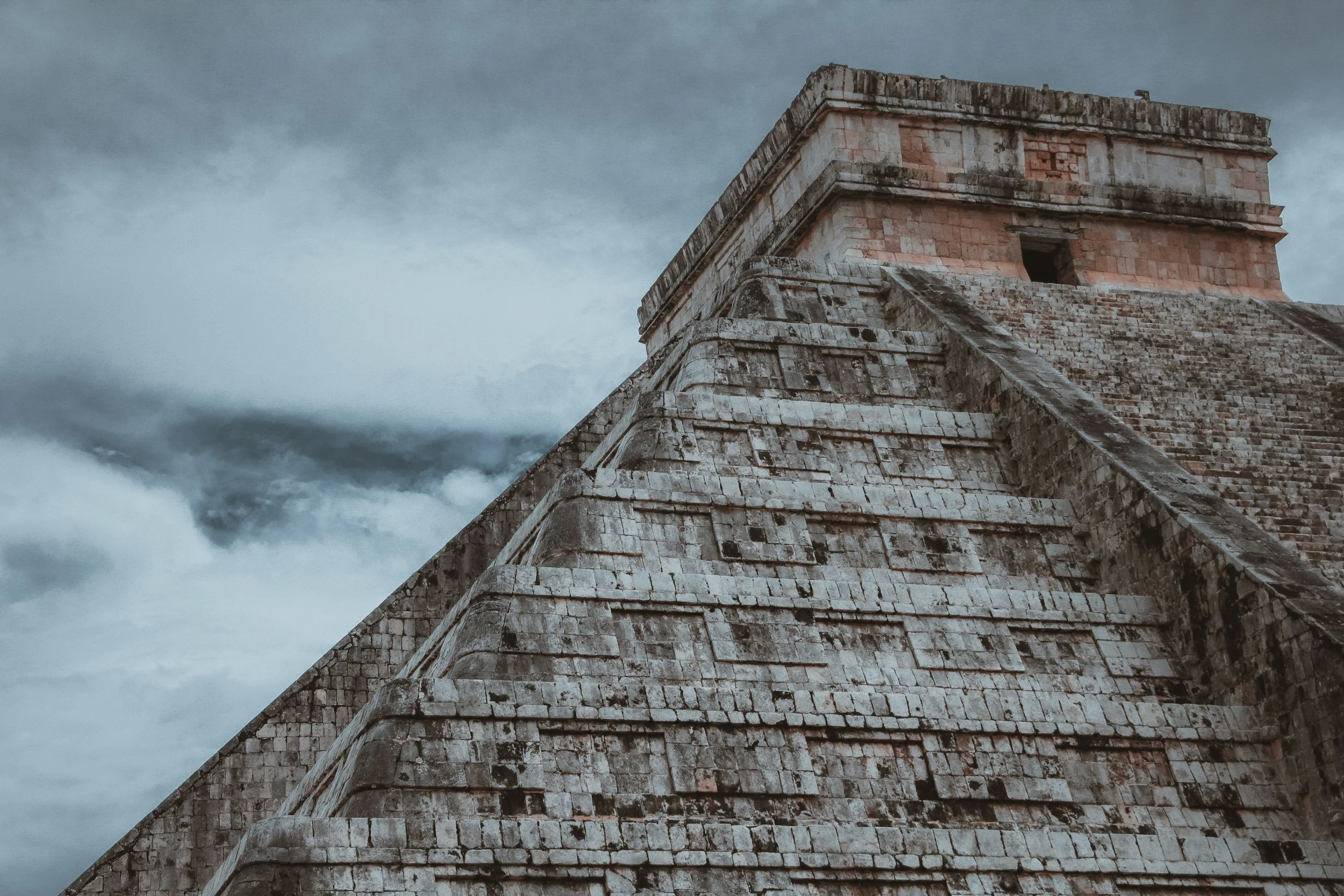
Case 2: The Classic Maya Collapse (8th–9th Centuries CE)
Thermodynamic-Entropic Substrate (TEe)
Maya civilization in the southern lowlands depended on intensive maize agriculture supported by slash-and-burn (swidden) cultivation supplemented by terracing, raised fields, and household gardens (Turner & Sabloff, 2012). Population growth from 600 to 800 CE pushed agricultural intensification to ecological limits.
Deforestation reduced soil fertility and increased erosion. Shortened fallow periods depleted nutrients. Paleoclimate evidence shows that the Terminal Classic period (800–900 CE) experienced recurring droughts, including severe events around 810, 860, and 910 CE (Haug et al., 2003; Kennett et al., 2012). These droughts directly reduced agricultural yields in a system already operating near carrying capacity.
The Maya lacked draft animals and had limited metal tools, constraining agricultural productivity. Their energy base was almost entirely solar, captured through photosynthesis and human labor. When environmental degradation and drought reduced this energy flow, the surplus available to support non-food-producing elites and monument construction contracted sharply (Tainter, 1988, pp. 170–175; Diamond, 2005, pp. 157–177).
Complexity (C³)
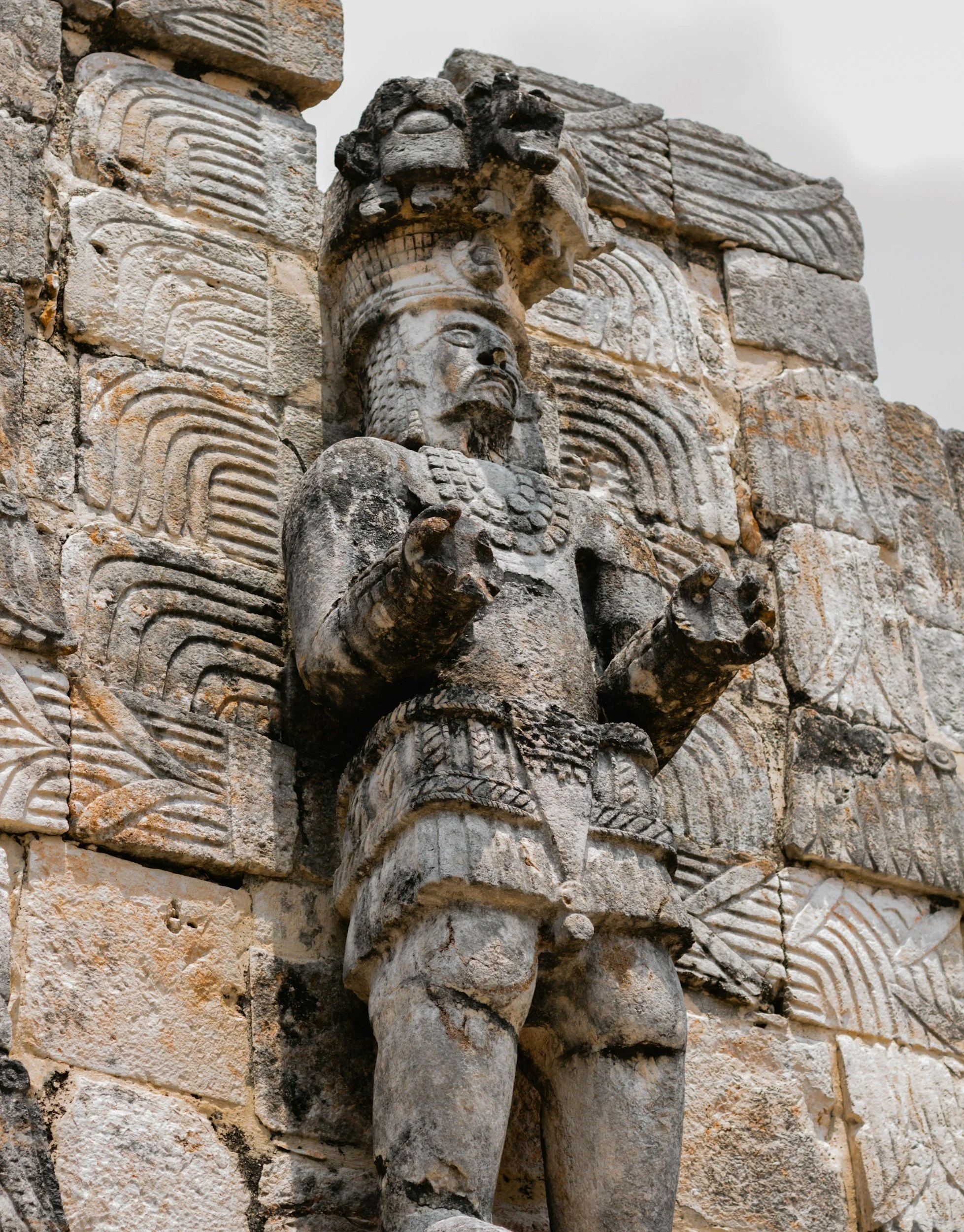
Classic Maya city-states developed elaborate political hierarchies, with divine kings (k'uhul ajaw) presiding over stratified societies of nobles, priests, warriors, artisans, and farmers. Monumental architecture such as pyramids, palaces, ball courts required massive labor mobilization (Sharer & Traxler, 2006).
Competition between city-states intensified in the Late Classic period (600–800 CE), driving further complexity. Kings invested in larger monuments, more elaborate rituals, and expanded bureaucracies to demonstrate power and maintain legitimacy (Martin & Grube, 2008). Warfare increased, requiring resources for fortifications and military expeditions (Webster, 2002).
This escalating complexity imposed rising costs on agricultural populations who had to provide surplus food, labor for construction, and military service. Skeletal evidence shows increasing malnutrition and stress markers in commoner burials during the Late Classic, indicating that the costs of supporting elites were exceeding sustainable levels (Wright, 2006). As with Rome, marginal returns to added complexity declined; more elaborate courts and monuments did not solve underlying agricultural and ecological problems.
Attractors (A³)
Maya kings derived legitimacy from their role as intermediaries with gods and ancestors. This required continuous ritual performance and monument construction to demonstrate divine favor (Sharer & Traxler, 2006). As crises mounted such as drought, crop failure, and military defeats, kings responded by intensifying ritual activity and building more monuments, attempting to regain supernatural support (Tainter, 1988, pp. 173–174).
This created a maladaptive feedback loop. Monument construction consumed resources that might have been directed toward agricultural intensification, water management, or food storage. Inter-polity competition became an attractor: no single city-state could unilaterally reduce expenditure on warfare and display without losing status and inviting conquest (Webster, 2002).
The ideological commitment to divine kingship made systemic simplification nearly impossible within the existing framework. Kings could not acknowledge limits or scale back without undermining their cosmological role. Reform would require abandoning the fundamental organizing principle of Classic Maya society.
Resilience (R³)
The southern lowland Maya exhibited limited resilience by the Late Classic period. Agricultural diversity was relatively low; maize dominated caloric intake, with limited reliance on alternative crops that might buffer drought impacts (Turner & Sabloff, 2012). Political fragmentation into competing city-states prevented coordinated responses to regional environmental stress.
Water management infrastructure existed in the form of reservoirs and cisterns, but these were often centralized in urban cores and vulnerable to drought (Scarborough, 2003). When water systems failed, there was little redundancy. Trade networks provided some diversification, but the southern lowlands' geography limited access to diverse ecological zones compared to highland regions.
Social trust appears to have fractured in the Terminal Classic. Evidence of interpersonal violence increased. Monument construction ceased abruptly at site after site between 800 and 900 CE, suggesting collapse of elite authority rather than orderly transition (Martin & Grube, 2008). Populations dispersed to rural areas or migrated north, abandoning the southern lowland cities (Dunning et al., 2012).
Purposive Action (P³)
The Maya demonstrated adaptive capacity earlier in their history—developing diverse agricultural techniques, water management, and long-distance trade. However, by the Late Classic, purposive action was increasingly constrained by attractor dynamics (Tainter, 1988, pp. 173–175).
There is little evidence of strategic simplification or coordinated conservation efforts during the Terminal Classic. Instead, competition intensified. Some polities attempted innovation through warfare, alliance-building, or agricultural intensification, but within the existing paradigm rather than fundamental restructuring (Webster, 2002).
The collapse, when it came, was not planned simplification but system failure. The Classic Maya lowland civilization dissolved rather than transformed. Populations survived but at much lower density and complexity. Northern Maya regions, which had different ecological conditions and somewhat different political structures, proved more resilient (Dunning et al., 2012). This suggests that the southern collapse was not inevitable but resulted from specific thermodynamic constraints, complexity traps, and institutional rigidities.
Case 3: The Akkadian Empire Collapse (c. 2200 BCE)
Thermodynamic-Entropic Substrate (TEe)
The Akkadian Empire, centered in Mesopotamia under Sargon and his successors (c. 2334–2154 BCE), was the first large territorial state in world history. Its economy depended on irrigated agriculture in the alluvial plains and extensive trade networks connecting Mesopotamia to surrounding regions (Liverani, 2014).
Around 2200 BCE, the empire experienced sudden collapse coinciding with an abrupt climate shift, a severe drought lasting roughly 300 years known as the 4.2 kiloyear event (Weiss et al., 1993; Cullen et al., 2000). Paleoclimate data from marine sediments, lake cores, and archaeological evidence show a dramatic aridification across the Near East.
This drought directly reduced agricultural output in rain-fed areas and decreased river flow, impacting irrigation systems. The empire's northern agricultural zones, particularly in the Khabur Plains, suffered population collapse and abandonment (Weiss et al., 1993). The energy base supporting the empire which was the food surplus from agriculture, contracted rapidly. Unlike gradual environmental degradation in the Roman or Maya cases, the Akkadian collapse involved a sharp exogenous thermodynamic shock.
Complexity (C³)
The Akkadian Empire represented a quantum increase in political complexity compared to earlier city-states. Sargon and his successors created a centralized bureaucracy, standardized systems of weights and measures, controlled trade routes, and maintained a standing army to enforce control over diverse regions (Liverani, 2014; Tainter, 1988, pp. 183–187).
This complexity required substantial administrative overhead. Maintaining garrisons in distant territories, managing tribute collection, and coordinating economic activity across ecological zones demanded significant resources. The empire's scale meant that coordination costs were high and vulnerabilities were geographically distributed.
When drought reduced agricultural output in the northern periphery, the empire faced simultaneous challenges: lost tax revenue, population displacement, increased military costs to suppress unrest, and breakdown of trade networks. The centralized structure lacked flexibility to adapt quickly; distant regions could not be supported or controlled when the energy surplus declined (Weiss & Bradley, 2001).
Attractors (A³)
The Akkadian imperial model created path dependencies. Having invested in military conquest and bureaucratic administration, the empire depended on continued expansion and tribute extraction to maintain itself. When expansion ceased and tribute declined due to drought, the system faced fiscal crisis (Tainter, 1988, p. 186).
Cultural and ideological attractors reinforced imperial structure. Kings claimed divine mandate and universal rule; retreat or decentralization would delegitimize royal authority. Inscriptions from the period show rulers attempting to maintain the fiction of control even as regions slipped away (Liverani, 2014).
The empire's investment in southern Mesopotamian irrigation agriculture created geographic lock-in. Unlike mobile pastoralists who could relocate in response to drought, the sedentary agricultural population and urban centers were spatially fixed. When local water supplies failed, populations had limited options for migration within the imperial structure.
Resilience (R³)
The Akkadian Empire exhibited brittleness characteristic of highly centralized systems. Political authority concentrated in the king and a narrow elite; regional governors had limited autonomy to respond to local conditions (Liverani, 2014). This centralization meant that when central authority weakened, the entire structure was vulnerable.
Economic specialization reduced redundancy. Different regions provided different goods, like grain from the north, fish and dates from the south, metals and timber from peripheral areas, creating interdependencies that became vulnerabilities when trade routes disrupted (Tainter, 1988, pp. 184–185). The empire lacked diverse, locally self-sufficient regions that could buffer system-wide shocks.
Archaeological evidence suggests rapid political disintegration. The capital city of Akkad (whose location remains uncertain) was abandoned. Successor states emerged, ie the Gutian period and the Ur III dynasty, but the imperial model itself collapsed. This indicates low systemic resilience; the structure could not absorb the shock and reorganize at a lower complexity level within the same institutional framework (Weiss & Bradley, 2001).
Purposive Action (P³)
Evidence for adaptive responses during the drought is limited by the archaeological record, but texts suggest attempts at crisis management. Kings mounted military campaigns to secure resources and suppress rebellions. There may have been efforts to relocate populations or intensify irrigation in areas where water remained available (Weiss et al., 1993).
However, the speed and severity of the climate shock likely exceeded the capacity for institutional adaptation. The empire lacked polycentricity, in this case, regional centers with authority to reorganize independently. Decision-making pathways flowed through the center, which became a bottleneck during crisis.
After collapse, the Mesopotamian region reorganized. The subsequent Ur III period (c. 2112–2004 BCE) rebuilt centralized control but with modifications: more attention to local administration, diversified agricultural strategies, and different territorial extent (Liverani, 2014). This suggests learning from the Akkadian experience, though Ur III also eventually collapsed under similar thermodynamic and complexity pressures.
The Akkadian case illustrates how rapid thermodynamic shocks (climate-driven agricultural failure) interact with complexity and attractor dynamics. A more resilient, polycentric system might have reorganized regionally rather than experiencing total imperial collapse, but the centralized structure and ideological commitment to universal empire made adaptive simplification nearly impossible within the existing framework.
Common Patterns Across these Cases
These three cases, Roman, Maya, and Akkadian, demonstrate recurring dynamics visible through the TECARP framework:
Thermodynamic constraint is foundational. Each civilization operated within biophysical limits set by available energy (conquest for Rome, solar agriculture for Maya, irrigation agriculture for Akkad). When energy surplus declined, whether through depletion (Rome), environmental degradation (Maya), or climate shock (Akkad), the economic base could not support existing complexity levels.
Complexity exhibits diminishing and negative returns. All three societies responded to problems by adding complexity: more bureaucracy, more military, more infrastructure, following Tainter's model. Initially beneficial, these responses eventually consumed more resources than they returned, creating a trap where neither expansion nor simplification was viable within existing structures (Tainter, 1988).
Attractors resist adaptation. Institutional structures, ideological commitments, and material investments created path dependencies. Roman emperors could not abandon imperial grandeur, Maya kings could not stop building monuments without delegitimizing their divine mandate, and Akkadian rulers could not decentralize without threatening the imperial project. These attractors prevented the kind of purposive simplification that might have enabled smoother transitions.
Lost resilience accelerates collapse. Centralization, specialization, and elimination of redundancy made systems brittle. When shocks occurred through military defeats, droughts, or supply disruptions, there were no buffers. Social trust fragmented under stress, preventing collective action precisely when it was most needed.
Collapse is often simplification, not extinction. In each case, human populations survived and reorganized at lower complexity levels requiring less energy throughput. Post-Roman Europe, post-Classic Maya regions, and post-Akkadian Mesopotamia all continued, but with simpler political structures, reduced population density, and smaller scale coordination. Collapse represented release from unsustainable complexity rather than total system death.
The TECARP framework integrates these patterns. Thermodynamic constraints (TEe) set boundary conditions. Complexity (C³) provides benefits but imposes rising costs. Attractors (A³) lock in patterns that may become maladaptive. Resilience (R³) determines the capacity to absorb shocks and reorganize. Purposive Action (P³) represents the possibility, though often unrealized, of intentional adaptation before crisis forces change.
These historical cases suggest that civilizational trajectories are neither deterministic nor entirely contingent. Thermodynamic and complexity dynamics create strong constraints, but the specifics of attractor formation, resilience erosion, and purposive responses shape outcomes. Societies that maintain diversity, decentralization, and adaptive capacity while managing complexity costs may navigate transitions more successfully than those locked into rigid, brittle, high-throughput structures (Tainter, 1988; Holling, 2001).
A final note
Modern archeology and biophysical data regarding these collapse scenarios have highlighted the existence of ecological shocks that contributed to the decline of each of these societies. Evaluation of sediment and cave stalagmite data indicates severe, prolonged megadroughts during the Classic Maya collapse (Hodell et al. 1995; Haug et al. 2003; Kennett et al. 2012), including a 13-year drought and several others lasting over three years, revealed through subannual isotope analysis of a Yucatán stalagmite (James et al. 2025) These droughts contributed to regional fragmentation and migration, where the lowland cities emptied but complex populations persisted in the highlands. In Akkadian research, a body of work points to a 4.2 kiloyear aridification event that caused a catastrophic drop in agricultural yields, evidenced by soil-stratigraphic data showing abandonment of Tell Leilan and regional desertion following a marked increase in aridity around 2200 BCE (Weiss et al. 1993) and deep-sea sediment records linking Mesopotamian streamflow decline to cooler North Atlantic sea-surface temperatures (Cullen & deMenocal 2000). Historian Kyle Harper has noted that Rome was influenced by the Late Roman climate anomaly and devastating pandemics, arguing that the empire’s resilience was eventually overwhelmed by the combined pressure of a “little ice age” and recurrent plague (Harper 2017). Rather than invalidate Tainter’s thesis, this is part of how collapse operates: a society experiencing declining marginal returns on complexity does not have the net energy surplus to maintain its structure in the face of shocks i.e., there is no reserve.
-
References
Cullen, H. M., deMenocal, P. B., Hemming, S., Hemming, G., Brown, F. H., Guilderson, T., & Sirocko, F. (2000). Climate change and the collapse of the Akkadian empire: Evidence from the deep sea. Geology, 28(4), 379-382.
Diamond, J. (2005). Collapse: How Societies Choose to Fail or Succeed. Viking Press.
Dunning, N. P., Beach, T. P., & Luzzadder-Beach, S. (2012). Kax and kol: Collapse and resilience in lowland Maya civilization. Proceedings of the National Academy of Sciences, 109(10), 3652-3657.
Haug, G. H., Günther, D., Peterson, L. C., Sigman, D. M., Hughen, K. A., & Aeschlimann, B. (2003). Climate and the collapse of Maya civilization. Science, 299(5613), 1731-1735.
Holling, C. S. (2001). Understanding the complexity of economic, ecological, and social systems. Ecosystems, 4(5), 390-405.
Hughes, J. D. (1975). Ecology in Ancient Civilizations. University of New Mexico Press.
Hughes, J. D. (2014). Environmental Problems of the Greeks and Romans: Ecology in the Ancient Mediterranean (2nd ed.). Johns Hopkins University Press.
Jones, A. H. M. (1964). The Later Roman Empire, 284-602: A Social, Economic, and Administrative Survey. Johns Hopkins University Press.
Kennett, D. J., Breitenbach, S. F., Aquino, V. V., Asmerom, Y., Awe, J., Baldini, J. U., ... & Haug, G. H. (2012). Development and disintegration of Maya political systems in response to climate change. Science, 338(6108), 788-791.
Liverani, M. (2014). The Ancient Near East: History, Society and Economy. Routledge.
Martin, S., & Grube, N. (2008). Chronicle of the Maya Kings and Queens: Deciphering the Dynasties of the Ancient Maya(2nd ed.). Thames & Hudson.
Meiggs, R. (1982). Trees and Timber in the Ancient Mediterranean World. Clarendon Press.
Scarborough, V. L. (2003). The Flow of Power: Ancient Water Systems and Landscapes. School of American Research Press.
Sharer, R. J., & Traxler, L. P. (2006). The Ancient Maya (6th ed.). Stanford University Press.
Tainter, J. A. (1988). The Collapse of Complex Societies. Cambridge University Press.
Turner, B. L., & Sabloff, J. A. (2012). Classic period collapse of the Central Maya Lowlands: Insights about human–environment relationships for sustainability. Proceedings of the National Academy of Sciences, 109(35), 13908-13914.
Webster, D. (2002). The Fall of the Ancient Maya: Solving the Mystery of the Maya Collapse. Thames & Hudson.
Weiss, H., & Bradley, R. S. (2001). What drives societal collapse? Science, 291(5504), 609-610.
Weiss, H., Courty, M. A., Wetterstrom, W., Guichard, F., Senior, L., Meadow, R., & Curnow, A. (1993). The genesis and collapse of third millennium north Mesopotamian civilization. Science, 261(5124), 995-1004.
Wickham, C. (2009). The Inheritance of Rome: Illuminating the Dark Ages, 400-1000. Penguin Books.
Wright, L. E. (2006). Diet, Health, and Status Among the Pasión Maya: A Reappraisal of the Collapse. Vanderbilt Institute of Mesoamerican Archaeology.
Cullen, H.M. & deMenocal, P.B. (2000). “North Atlantic influence on Tigris-Euphrates streamflow.” International Journal of Climatology, 20(8), 853–863.
Harper, K. (2017). The Fate of Rome: Climate, Disease, and the End of an Empire. Princeton University Press.
Haug, G.H., Günther, D., Peterson, L.C., Sigman, D.M., Hughen, K.A., & Aeschlimann, B. (2003). “Climate and the Collapse of Maya Civilization.” Science, 299(5613), 1731–1735.
Hodell, D.A., Curtis, J.H., & Brenner, M. (1995). “Possible role of climate in the collapse of Classic Maya civilization.” Nature, 375, 391–394.
James, D.H. et al. (2025). Subannual stalagmite δ18O record of Terminal Classic droughts, Yucatán. Science Advances.
Kennett, D.J. et al. (2012). “Development and Disintegration of Maya Political Systems in Response to Climate Change.” Science, 338(6108), 788–791.
Weiss, H., Courty, M.A., Wetterstrom, W., Guichard, F., Senior, L., Meadow, R., & Curnow, A. (1993). “The Genesis and Collapse of Third Millennium North Mesopotamian Civilization.” Science, 261(5124), 995–1004.