Energy Descent
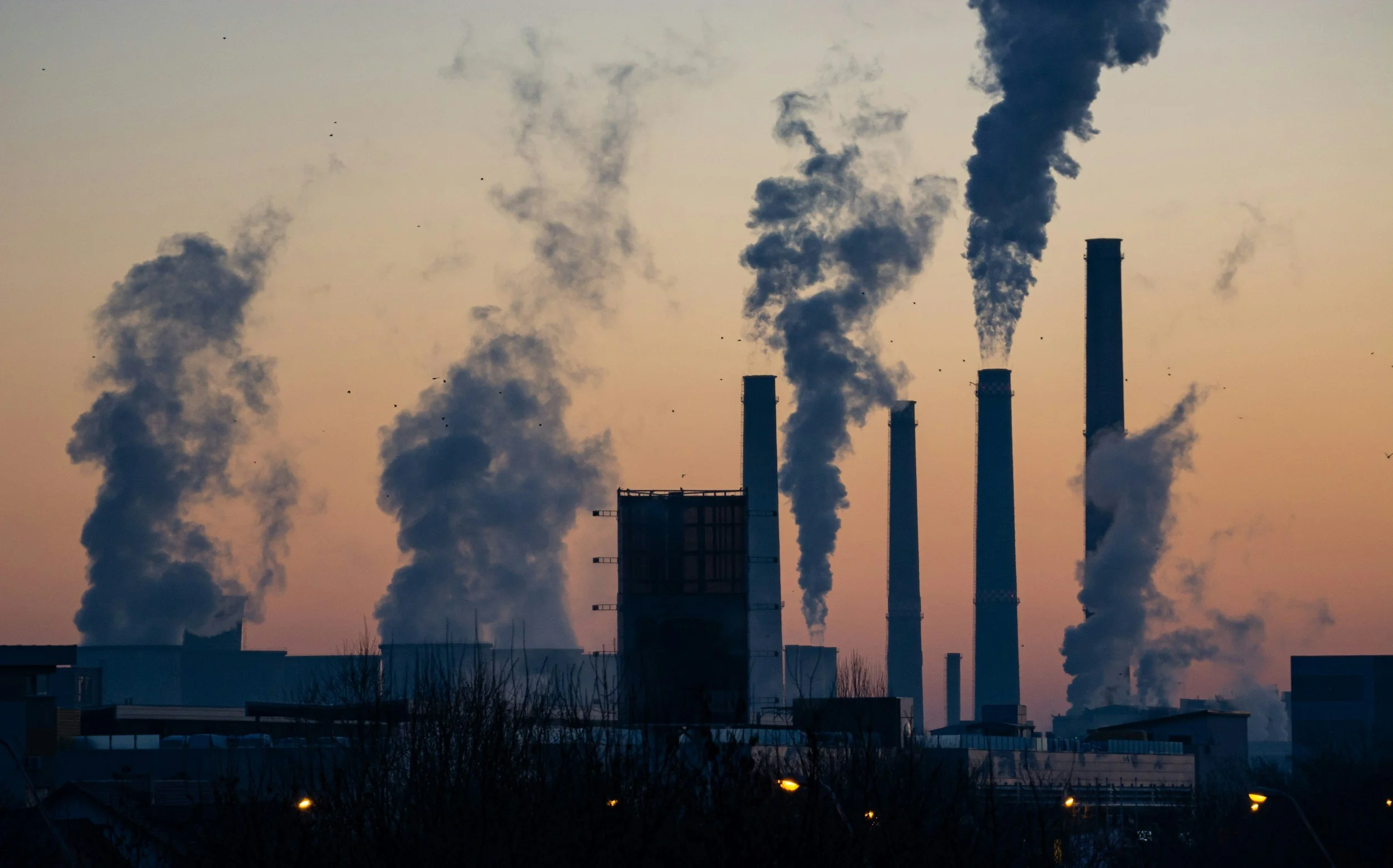
What the Data Shows
The EROI curves and acceleration data are not a prediction about the future. Rather, they are a description of a transition already underway. Conventional oil production peaked globally around 2005 and has been sustained through unconventional sources with structurally lower net energy returns since then (IEA, 2010; Hall et al., 2014). Total liquid fuels production has continued to grow in gross terms, but net energy available to society, after extraction, processing and distribution costs are accounted for, has plateaued and in some metrics, declined (King & Hall, 2011; Court & Fizaine, 2017).
The data is not primarily about climate, though climate is part of it. It is about the biophysical reality of a civilization that has been running on stored solar energy. Fossil fuels are ancient sunlight, compressed over geological time. Civilization is encountering the limits of that store.
Atmospheric carbon dioxide stood at roughly 280 parts per million before industrialization. It is now above 420 and rising (NOAA, 2024). This is not a measurement in dispute. It comes from ice cores, direct atmospheric monitoring, and multiple independent verification systems developed across different countries with different political interests (Petit et al., 1999; EPICA, 2004; NOAA, 2024). The increase is the exhaust of two centuries of extraordinary energy extraction, the waste heat and waste carbon that come from the second law of thermodynamics.
Global average temperature has increased approximately 1.2 degrees Celsius above pre-industrial levels (IPCC, 2021). The physics of why CO₂ causes warming—the greenhouse effect—was established in the nineteenth century through the work of Fourier, Tyndall, and Arrhenius, and has been validated at every scale from laboratory to planetary (Fourier, 1824; Tyndall, 1861; Arrhenius, 1896). The effects are not uniform: some regions are warming much faster, precipitation patterns are shifting, extreme weather events are intensifying, sea levels are rising (IPCC, 2021). These are not predictions. They are measurements.
Biodiversity is declining at a rate not seen in the fossil record since the mass extinction events (Ceballos et al., 2015; WWF, 2022). Fisheries that supported human populations for millennia are collapsing (Worm et al., 2006). Aquifers that took tens of thousands of years to fill are being drawn down in decades (Gleeson et al., 2012; Konikow, 2011). Topsoil that takes centuries to form is eroding in years (Montgomery, 2007; Pimentel et al., 1995).
This is not a story about any single resource or any single pollutant. It is the signature of a civilization running beyond its energy budget—extracting, consuming, and dispersing at a rate that the system cannot replenish. The second law of thermodynamics, operating at planetary scale. This is energy descent: not the sudden absence of energy, but a sustained directional reduction in the net energy surplus that industrial civilization has depended on for two centuries.
The Great Acceleration is the explosion of population, economic output, material throughput, and complexity that defines the twentieth century, and it was downstream of an extraordinary and unrepeatable fossil energy subsidy (Steffen et al., 2015). The descent is not symmetrical with the ascent. The infrastructure, institutions, and population levels built were for a different energy reality, and they carry maintenance costs that the descending surplus is increasingly unable to meet.
And yet the political conversation treats these as policy questions, like emissions targets, fuel standards, carbon taxes, as though the problem were primarily about regulation. However, the problem is structural. Policy can accelerate or decelerate the trajectory, but it cannot repeal the physics. While neoclassical economics treats the economy as a ‘perpetual motion machine,’ the realities of thermodynamic laws suggest this to be false (Georgescu-Roegen, 1971; Daly, 1996).

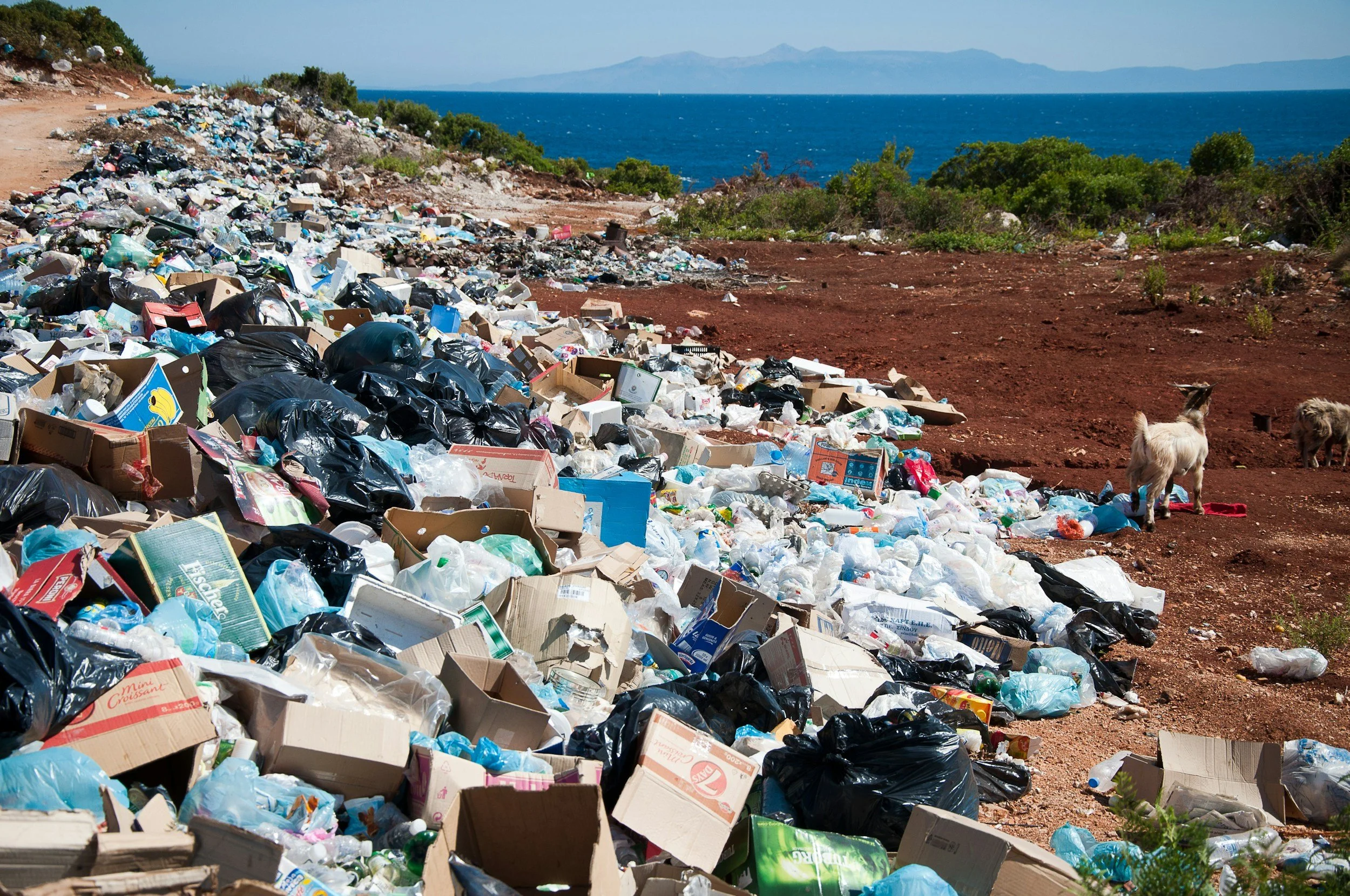
The Thermodynamic Trap
So we have discussed so far that modern civilization is a dissipative structure maintained by continuous high quality energy degraded to waste (entropy) (Prigogine & Stengers, 1984), which has been built on a concentrated fossil energy stock representing hundreds of millions of years of captured solar energy.
The infrastructure, institutions, and knowledge of civilization are the results of that energy, which require ongoing energy for maintenance (Hall & Klitgaard, 2012). With EROI declining (Guilford et al., 2011; Hall et al., 2014), the surplus of available energy is decreasing because the highest quality, easiest to access energy has already been extracted. The cost of transitioning to renewables requires energy as well, as solar panels, turbines, batteries, nuclear plants, and even fusion require energy, which is itself needed for maintenance of ongoing complexity. Furthermore, the economic engine runs on growth, via GDP, which doesn’t occur at the same rate with maintenance alone.
We need surplus energy to transition away from fossil fuels, but we are losing surplus energy because we are depleting high EROI fuels to maintain complexity already existent. We can’t simply abandon current infrastructure so any transition must maintain those flows while simultaneously building replacement capacity. The problem further is that renewable energy systems are less energy dense and more material intensive than fossil systems (Smil, 2016; Vidal et al., 2013).
The trap:
We are past peak cheap energy (IEA, 2010). Complexity maintenance costs are rising due to infrastructure aging, climate change forcing adaptation, and resource depletion. The timescales don’t align. Fossil depletion and climate forcing operate on decade timescale while building entirely new energy infrastructure at civilization scale requires multiple decades due to bottlenecks in manufacturing, mining, and skilled labor (IEA, 2021). There is no energetic surplus to maintain current complexity and build replacement infrastructure at the required pace. What happens instead is unmanaged simplification, or loss of complexity as the energy available to maintain it declines (Tainter, 1988; Homer-Dixon, 2006).
*For detailed review on Neoclassical economics, see below

-
Oil/Energy:
Court, Victor and Fizaine, Florian. “Long-Term Estimates of the Energy-Return-on-Investment (EROI) of Coal, Oil, and Gas Global Productions.” Ecological Economics 138 (2017): 145-159.
Guilford, M.C., et al. “A New Long Term Assessment of Energy Return on Investment (EROI) for U.S. Oil and Gas Discovery and Production.” Sustainability 3, no. 10 (2011): 1866-1887.
Hall, C.A.S., Lambert, J.G., and Balogh, S.B. “EROI of Different Fuels and the Implications for Society.” Energy Policy 64 (2014): 141-152.
IEA. World Energy Outlook 2010. International Energy Agency, 2010.
IEA. Net Zero by 2050: A Roadmap for the Global Energy Sector. International Energy Agency, 2021.
King, Carey W. and Hall, Charles A.S. “Relating Financial and Energy Return on Investment.” Sustainability 3, no. 10 (2011): 1810-1832.
Climate:
Arrhenius, Svante. “On the Influence of Carbonic Acid in the Air upon the Temperature of the Ground.” Philosophical Magazine and Journal of Science 41 (1896): 237-276.
EPICA Community Members. “Eight Glacial Cycles from an Antarctic Ice Core.” Nature 429 (2004): 623-628.
Fourier, Jean-Baptiste Joseph. “Remarques Générales Sur Les Températures Du Globe Terrestre Et Des Espaces Planétaires.” Annales de Chimie et de Physique 27 (1824): 136-167.
IPCC. Climate Change 2021: The Physical Science Basis. Contribution of Working Group I to the Sixth Assessment Report. Cambridge University Press, 2021.
NOAA Global Monitoring Laboratory. “Trends in Atmospheric Carbon Dioxide.” 2024. https://gml.noaa.gov/ccgg/trends/
Petit, J.R., et al. “Climate and Atmospheric History of the Past 420,000 Years from the Vostok Ice Core, Antarctica.” Nature 399 (1999): 429-436.
Tyndall, John. “On the Absorption and Radiation of Heat by Gases and Vapours.” Philosophical Magazine Series 4 22, no. 146 (1861): 169-194, 273-285.
Biodiversity/Resources:
Ceballos, Gerardo, et al. “Accelerated Modern Human–Induced Species Losses: Entering the Sixth Mass Extinction.” Science Advances 1, no. 5 (2015): e1400253.
Gleeson, Tom, et al. “Water Balance of Global Aquifers Revealed by Groundwater Footprint.” Nature 488 (2012): 197-200.
Konikow, L.F. “Contribution of Global Groundwater Depletion Since 1900 to Sea-Level Rise.” Geophysical Research Letters 38 (2011): L17401.
Montgomery, David R. “Soil Erosion and Agricultural Sustainability.” PNAS 104, no. 33 (2007): 13268-13272.
Pimentel, David, et al. “Environmental and Economic Costs of Soil Erosion and Conservation Benefits.” Science 267, no. 5201 (1995): 1117-1123.
Worm, Boris, et al. “Impacts of Biodiversity Loss on Ocean Ecosystem Services.” Science 314, no. 5800 (2006): 787-790.
WWF. Living Planet Report 2022: Building a Nature-Positive Society. 2022.
Complexity Theory & Collapse:
Hall, Charles A.S. and Klitgaard, Kent A. Energy and the Wealth of Nations: An Introduction to Biophysical Economics. Springer, 2012.
Homer-Dixon, Thomas. The Upside of Down: Catastrophe, Creativity, and the Renewal of Civilization. Island Press, 2006.
Prigogine, Ilya and Stengers, Isabelle. Order Out of Chaos: Man’s New Dialogue with Nature. Bantam Books, 1984.
Tainter, Joseph A. The Collapse of Complex Societies. Cambridge University Press, 1988.
Economics/Theory:
Daly, Herman E. Beyond Growth: The Economics of Sustainable Development. Beacon Press, 1996.
Georgescu-Roegen, Nicholas. The Entropy Law and the Economic Process. Harvard University Press, 1971.
Steffen, Will, et al. “The Trajectory of the Anthropocene: The Great Acceleration.” The Anthropocene Review 2, no. 1 (2015): 81-98.
Energy Transition:
Smil, Vaclav. Power Density: A Key to Understanding Energy Sources and Uses. MIT Press, 2015.
Vidal, Olivier, Goffé, Bruno, and Arndt, Nicholas. “Metals for a Low-Carbon Society.” Nature Geoscience 6, no. 11 (2013): 894-896.
Energy And Economical Systems
Energy and Economic Growth
Neoclassical Economics Review & Limitations
Neoclassical Economics and the Entropy Problem
This document provides a straightforward overview of neoclassical economic theory, its treatment of physical constraints, and the alternative frameworks that have emerged to address thermodynamic realities.
Neoclassical Economics: Core Framework
Neoclassical economics emerged in the late 19th century and remains the dominant paradigm in economic theory and policy. The framework centers on several foundational assumptions:
Production is modeled primarily as a function of capital and labor, formalized in production functions where output depends on these two factors. In the standard Cobb-Douglas formulation, for example,
Y = A × Kα × Lβ
where Y represents output, K is capital, L is labor, and A is total factor productivity (Cobb & Douglas, 1928). Natural resources and energy appear either as exogenous parameters within total factor productivity or, when included explicitly, as substitutable inputs that can be replaced by capital or technology.
The framework assumes continuous substitutability among inputs. If one resource becomes scarce or expensive, capital investment and technological innovation are expected to provide alternatives. This substitutability is typically assumed to be smooth and unlimited, constrained primarily by relative prices rather than physical limits (Solow, 1974).
Economic growth is understood as an ongoing process driven by capital accumulation, labor force expansion, and technological progress. The neoclassical growth model, formalized by Robert Solow in the 1950s, shows economies converging toward steady-state growth rates determined by technological change and population growth, with no reference to biophysical constraints (Solow, 1956, 1957).
Efficiency is measured in monetary terms through market prices. Resource allocation is considered optimal when marginal costs equal marginal benefits in dollar terms, without explicit accounting for energy or material throughput.
The Thermodynamic Gap
The disconnect between neoclassical economics and physical reality centers on the laws of thermodynamics, particularly entropy.
The First Law of Thermodynamics (conservation of energy) states that energy cannot be created or destroyed, only transformed. Economic production does not create physical value from nothing but rather it rearranges matter and energy. The Second Law states that in any energy transformation, some useful energy is irreversibly degraded into less useful forms (heat), increasing overall entropy (Kondepudi & Prigogine, 1998). Every economic process requires energy and increases the disorder of the system.
These physical laws impose several constraints absent from neoclassical models. Energy and material flows must be balanced; economic activity cannot produce output without corresponding inputs of low-entropy resources. The quality of energy matters, not just quantity. Concentrated, low-entropy energy sources enable work that dispersed, high-entropy energy cannot. Waste is thermodynamically inevitable; perfect recycling is impossible because every transformation loses usable energy. And substitution has physical limits, therefore capital cannot replace energy in production, because capital itself requires energy for its creation and operation (Cleveland et al., 1984).
In neoclassical production functions, energy and materials often appear as minor or omitted variables, implying they can be reduced indefinitely through substitution or technological progress. Yet empirical evidence shows energy use closely tracks economic output across time and geography (Hall et al., 1986). The historical record demonstrates that economic growth has consistently required increased energy throughput; efficiency gains have enabled more activity rather than less energy use overall. This has resulted in a phenomenon known as the Jevons Paradox or rebound effect (Jevons, 1865; Saunders, 1992).
Biophysical Economics
Biophysical economics explicitly incorporates thermodynamic principles and material flows into economic analysis. This framework treats the economy as a subsystem of the biosphere, subject to physical laws.
Nicholas Georgescu-Roegen, a Romanian-American economist, laid the theoretical foundation in the 1970s. He argued that economic processes are fundamentally entropic, transforming valuable low-entropy resources into high-entropy waste. His key insight was that the economic process is not circular but unidirectional, such that matter and energy flow through the economy, degrading in quality as they do (Georgescu-Roegen, 1971). He criticized neoclassical economics for ignoring the entropy law and treating the economy as a mechanical system rather than a thermodynamic one.
Howard Odum developed energy systems theory and the concept of emergy (embodied energy), which is the total solar energy required directly and indirectly to produce a product or service (Odum, 1988, 1996). This provides a biophysical accounting system parallel to monetary accounting, measuring the environmental work that went into creating economic goods.
More recently, Charles Hall and others have advanced the concept of Energy Return on Energy Invested (EROI), measuring how much usable energy is obtained from an energy source relative to the energy required to extract and process it (Hall et al., 1986; Hall et al., 2014). EROI has declined for major fossil fuel sources over recent decades, indicating that energy extraction requires increasing energy inputs. For US oil production, EROI fell from over 100:1 in the 1930s to approximately 30:1 in the 1970s to below 20:1 by 2000 (Cleveland, 2005; Hall et al., 2014).
Biophysical economics reframes production functions to place energy as a primary, non-substitutable input. In models developed by researchers like Robert Ayres and Benjamin Warr, useful work (exergy applied to economic ends) better explains economic growth than traditional capital and labor factors (Ayres & Warr, 2005, 2009). Their empirical work shows that when energy quality and quantity are properly accounted for, the residual unexplained growth (Solow residual or total factor productivity) largely disappears, suggesting that what neoclassical theory attributes to technological progress may actually reflect increasing energy throughput.
Ecological Economics
Ecological economics shares biophysical economics' attention to physical limits but broadens the scope to include ecosystem services, scale limits, and sustainability criteria.
Herman Daly, a central figure in this tradition, distinguished between growth (quantitative expansion) and development (qualitative improvement). He argued that while development can continue, physical growth faces absolute limits in a finite system (Daly, 1977, 1996). His steady-state economics proposes an economy that maintains constant stocks of physical wealth and people, replenishing only to offset depreciation and mortality. Daly argued that neoclassical economics treats the economy as the whole system and nature as a subsector, when the reverse is true: the economy is a subsystem of the finite biosphere.
Ecological economics emphasizes scale, distribution, and allocation as distinct problems requiring different approaches (Daly, 1992). The optimal scale of the economy relative to its biophysical context cannot be determined by markets alone; it requires ecological criteria for sustainability. Distribution involves ethical considerations about fairness within and across generations. Only allocation, which is the distribution of resources among competing uses, is primarily a market function, and even this requires a framework of property rights and regulations.
The framework incorporates planetary boundaries, which are the biophysical thresholds beyond which Earth systems may transition to less hospitable states (Rockström et al., 2009; Steffen et al., 2015). These include climate stability, biodiversity loss, nitrogen and phosphorus cycles, ocean acidification, and others. Economic activity that transgresses these boundaries imposes unaccounted costs that may only manifest in the future or in distant locations.
Material Flow Analysis and Industrial Ecology
Material flow analysis tracks physical quantities of materials moving through economies, from extraction through use to disposal. This accounting reveals that high-income economies process tremendous quantities of materials per capita, often 50 to 100 metric tons per person per year when all flows are included (Krausmann et al., 2009; Wiedmann et al., 2015).
Industrial ecology applies systems thinking to material and energy flows in industrial systems, seeking to close loops and reduce waste. The field examines metabolism, which is the total material and energy throughput of economies and cities, using methods adapted from ecosystem ecology (Fischer-Kowalski, 1998; Haberl et al., 2004).
These empirical approaches document that despite efficiency improvements, total material and energy use has continued to grow in absolute terms. Relative decoupling (GDP growing faster than resource use) has occurred in some high-income countries, but absolute decoupling (GDP growth with declining resource use) at a sufficient scale to address global environmental limits remains rare and contested (Jackson, 2009; Wiedmann et al., 2015; Hickel & Kallis, 2020).
Thermoeconomics
Thermoeconomics attempts to integrate thermodynamic principles directly into economic analysis, sometimes using exergy (available energy to do work) as a measure of economic value (Wall, 1977; Valero et al., 2006).
This approach treats economic processes as subject to the same energy efficiency limits as physical processes. Work has examined whether economic value correlates with exergy content or exergy efficiency of production. While correlations exist in energy-intensive sectors, the relationship is more complex for information-intensive activities and services (Ayres & Martinás, 2005).
Some researchers propose using exergy cost accounting alongside monetary accounting to make thermodynamic constraints visible in economic decision-making (Sciubba & Zullo, 2011).
Points of Tension
The debate between neoclassical and biophysical perspectives centers on several empirical and theoretical questions.
Regarding substitution limits, neoclassical economists point to historical examples where technological innovation enabled substitution (such as fiber optics replacing copper wire). Biophysical economists counter that such examples involve substitution among materials, not substitution of capital for energy itself. The fiber optic system still requires energy to manufacture and operate (Cleveland & Ruth, 1997). They argue that at aggregate levels, energy cannot be substantially reduced without reducing economic output.
On the role of technology, neoclassical models often treat technological progress as exogenous or as responding to price signals, with few inherent physical limits. Biophysical economists argue that technology must obey thermodynamic laws; it can improve efficiency but cannot eliminate the need for energy and material inputs (Ayres, 2007). They note that efficiency gains have historically been accompanied by scale increases that offset the savings, ie the Jevons Paradox (Polimeni et al., 2008).
The interpretation of economic growth differs fundamentally. Neoclassical theory sees growth as potentially indefinite, driven by human capital, knowledge, and innovation (Romer, 1990). Biophysical and ecological economists argue that physical throughput cannot grow indefinitely on a finite planet, and that much of what is counted as economic growth represents draw-down of natural capital or shifting of costs in time and space rather than true value creation (Daly, 1996; Lawn, 2003).
The accounting of environmental costs remains disputed. Neoclassical economists generally accept that externalities exist but argue they can be internalized through pricing mechanisms like carbon taxes or cap-and-trade systems (Nordhaus, 2008). Ecological economists question whether market mechanisms can adequately price irreversible losses, non-linear threshold effects, or intergenerational impacts, and whether the scale of environmental crisis suggests market-based adjustments are sufficient (Spash, 2010).
Empirical Evidence
Several lines of empirical evidence inform this debate. Energy intensity (energy per unit GDP) has declined in many economies, which neoclassical economists cite as evidence of dematerialization. However, when adjusted for energy quality, trade flows (imported embodied energy), and inclusion of non-commercial energy, the decline is less pronounced (Cleveland et al., 2000). Studies show that OECD countries have partially achieved apparent dematerialization by offshoring energy-intensive manufacturing (Peters et al., 2011; Wiedmann et al., 2015).
The EROI of major energy sources has declined. Conventional oil extraction had EROI ratios above 30:1 at mid-century; current unconventional sources like tar sands or deepwater oil show ratios closer to 5:1 or lower (Murphy & Hall, 2010; Hall et al., 2014). This means an increasing fraction of extracted energy must be reinvested in energy extraction, leaving less net energy for other economic activities.
Material flow studies show that total global material extraction has accelerated despite efficiency improvements, rising from approximately 27 billion tonnes in 1970 to over 90 billion tonnes by 2020 (Krausmann et al., 2009; Haas et al., 2015; IRP, 2019). Per capita material footprints in high-income countries remain far above sustainable levels by most ecological measures.
The relationship between energy use and GDP remains tight. Cross-country studies show strong correlations between energy consumption and economic output, with elasticities often near 1.0, suggesting that economic growth requires proportional energy growth in the absence of structural economic shifts (Stern & Cleveland, 2004; Warr et al., 2010).
Implications for Policy and Theory
The thermodynamic critique suggests several areas where economic policy and theory might need revision.
Growth may need redefinition. If physical throughput cannot increase indefinitely, economic progress might focus on qualitative development, efficiency improvements within ecological limits, redistribution, and well-being metrics that decouple from material expansion (Victor, 2008; Jackson, 2009).
Resource accounting requires expansion beyond monetary measures. Physical accounts of energy, materials, and ecosystem services could complement GDP. Adjusted economic indicators might subtract resource depletion and environmental degradation from national accounts (Costanza et al., 1997; Kubiszewski et al., 2013).
Energy transitions merit thermodynamic analysis. The shift to renewable energy sources must account for their EROI characteristics, energy storage requirements, material intensities for infrastructure, and the energy cost of building out new systems while maintaining existing ones during transition periods (Trainer, 2012; Moriarty & Honnery, 2016).
Long-term planning may need to incorporate physical limits explicitly. Rather than assuming technological solutions will emerge, planning could identify non-negotiable biophysical constraints and design economic institutions to operate within them.
Conclusion
Neoclassical economics provides powerful tools for analyzing relative prices, resource allocation, and market mechanisms. However, its treatment of physical resources as minor or substitutable inputs sits uneasily with thermodynamic principles and empirical evidence on energy-economy relationships.
Biophysical economics, ecological economics, and related frameworks attempt to ground economic analysis in physical reality, treating the economy as a throughput system subject to entropy laws. These approaches suggest fundamental limits to material growth and reframe economic problems in terms of managing flows of energy and matter within sustainable bounds.
The empirical record shows persistent tight coupling between energy use and economic output, declining EROI for major energy sources, and continued growth in absolute material flows despite efficiency gains. Whether technological innovation can decouple economic well-being from physical throughput at the scale and speed required remains an open and consequential question.
The stakes are not merely theoretical. Economic models guide policy on climate change, resource management, development, and long-term planning. Models that omit or minimize physical constraints risk prescribing unworkable solutions. Conversely, models that overstate limits may foreclose beneficial adaptations. Getting the biophysical foundations right matters for navigating the challenges ahead.
-
Ayres, R. U. (2007). On the practical limits to substitution. Ecological Economics, 61(1), 115-128.
Ayres, R. U., & Martinás, K. (2005). On the reappraisal of microeconomics: Economic growth and change in a material world. Edward Elgar Publishing.
Ayres, R. U., & Warr, B. (2005). Accounting for growth: The role of physical work. Structural Change and Economic Dynamics, 16(2), 181-209.
Ayres, R. U., & Warr, B. (2009). The Economic Growth Engine: How Energy and Work Drive Material Prosperity. Edward Elgar Publishing.
Cleveland, C. J. (2005). Net energy from the extraction of oil and gas in the United States. Energy, 30(5), 769-782.
Cleveland, C. J., Costanza, R., Hall, C. A., & Kaufmann, R. (1984). Energy and the US economy: A biophysical perspective. Science, 225(4665), 890-897.
Cleveland, C. J., Kaufmann, R. K., & Stern, D. I. (2000). Aggregation and the role of energy in the economy. Ecological Economics, 32(2), 301-317.
Cleveland, C. J., & Ruth, M. (1997). When, where, and by how much do biophysical limits constrain the economic process? A survey of Nicholas Georgescu-Roegen's contribution to ecological economics. Ecological Economics, 22(3), 203-223.
Cobb, C. W., & Douglas, P. H. (1928). A theory of production. American Economic Review, 18(1), 139-165.
Costanza, R., d'Arge, R., De Groot, R., Farber, S., Grasso, M., Hannon, B., ... & Van Den Belt, M. (1997). The value of the world's ecosystem services and natural capital. Nature, 387(6630), 253-260.
Daly, H. E. (1977). Steady-State Economics. W.H. Freeman.
Daly, H. E. (1992). Allocation, distribution, and scale: Towards an economics that is efficient, just, and sustainable. Ecological Economics, 6(3), 185-193.
Daly, H. E. (1996). Beyond Growth: The Economics of Sustainable Development. Beacon Press.
Fischer-Kowalski, M. (1998). Society's metabolism: The intellectual history of materials flow analysis, Part I, 1860-1970. Journal of Industrial Ecology, 2(1), 61-78.
Georgescu-Roegen, N. (1971). The Entropy Law and the Economic Process. Harvard University Press.
Haas, W., Krausmann, F., Wiedenhofer, D., & Heinz, M. (2015). How circular is the global economy?: An assessment of material flows, waste production, and recycling in the European Union and the world in 2005. Journal of Industrial Ecology, 19(5), 765-777.
Haberl, H., Fischer-Kowalski, M., Krausmann, F., Weisz, H., & Winiwarter, V. (2004). Progress towards sustainability? What the conceptual framework of material and energy flow accounting (MEFA) can offer. Land Use Policy, 21(3), 199-213.
Hall, C. A., Cleveland, C. J., & Kaufmann, R. (1986). Energy and Resource Quality: The Ecology of the Economic Process. Wiley Interscience.
Hall, C. A., Lambert, J. G., & Balogh, S. B. (2014). EROI of different fuels and the implications for society. Energy Policy, 64, 141-152.
Hickel, J., & Kallis, G. (2020). Is green growth possible? New Political Economy, 25(4), 469-486.
IRP (International Resource Panel). (2019). Global Resources Outlook 2019: Natural Resources for the Future We Want. United Nations Environment Programme.
Jackson, T. (2009). Prosperity Without Growth: Economics for a Finite Planet. Earthscan.
Jevons, W. S. (1865). The Coal Question. Macmillan.
Kondepudi, D., & Prigogine, I. (1998). Modern Thermodynamics: From Heat Engines to Dissipative Structures. John Wiley & Sons.
Krausmann, F., Gingrich, S., Eisenmenger, N., Erb, K. H., Haberl, H., & Fischer-Kowalski, M. (2009). Growth in global materials use, GDP and population during the 20th century. Ecological Economics, 68(10), 2696-2705.
Kubiszewski, I., Costanza, R., Franco, C., Lawn, P., Talberth, J., Jackson, T., & Aylmer, C. (2013). Beyond GDP: Measuring and achieving global genuine progress. Ecological Economics, 93, 57-68.
Lawn, P. A. (2003). A theoretical foundation to support the Index of Sustainable Economic Welfare (ISEW), Genuine Progress Indicator (GPI), and other related indexes. Ecological Economics, 44(1), 105-118.
Moriarty, P., & Honnery, D. (2016). Can renewable energy power the future? Energy Policy, 93, 3-7.
Murphy, D. J., & Hall, C. A. (2010). Year in review—EROI or energy return on (energy) invested. Annals of the New York Academy of Sciences, 1185(1), 102-118.
Nordhaus, W. D. (2008). A Question of Balance: Weighing the Options on Global Warming Policies. Yale University Press.
Odum, H. T. (1988). Self-organization, transformity, and information. Science, 242(4882), 1132-1139.
Odum, H. T. (1996). Environmental Accounting: Emergy and Environmental Decision Making. John Wiley & Sons.
Peters, G. P., Minx, J. C., Weber, C. L., & Edenhofer, O. (2011). Growth in emission transfers via international trade from 1990 to 2008. Proceedings of the National Academy of Sciences, 108(21), 8903-8908.
Polimeni, J. M., Mayumi, K., Giampietro, M., & Alcott, B. (2008). The Jevons Paradox and the Myth of Resource Efficiency Improvements. Earthscan.
Rockström, J., Steffen, W., Noone, K., Persson, Å., Chapin III, F. S., Lambin, E. F., ... & Foley, J. A. (2009). A safe operating space for humanity. Nature, 461(7263), 472-475.
Romer, P. M. (1990). Endogenous technological change. Journal of Political Economy, 98(5, Part 2), S71-S102.
Saunders, H. D. (1992). The Khazzoom-Brookes postulate and neoclassical growth. The Energy Journal, 13(4), 131-148.
Sciubba, E., & Zullo, F. (2011). Exergy-based population dynamics: A thermodynamic view of the sustainability concept. Journal of Industrial Ecology, 15(2), 172-184.
Solow, R. M. (1956). A contribution to the theory of economic growth. Quarterly Journal of Economics, 70(1), 65-94.
Solow, R. M. (1957). Technical change and the aggregate production function. Review of Economics and Statistics, 39(3), 312-320.
Solow, R. M. (1974). The economics of resources or the resources of economics. American Economic Review, 64(2), 1-14.
Spash, C. L. (2010). The brave new world of carbon trading. New Political Economy, 15(2), 169-195.
Steffen, W., Richardson, K., Rockström, J., Cornell, S. E., Fetzer, I., Bennett, E. M., ... & Sörlin, S. (2015). Planetary boundaries: Guiding human development on a changing planet. Science, 347(6223), 1259855.
Stern, D. I., & Cleveland, C. J. (2004). Energy and economic growth. Rensselaer Working Papers in Economics, No. 0410.
Trainer, T. (2012). A critique of Jacobson and Delucchi's proposals for a world renewable energy supply. Energy Policy, 44, 476-481.
Valero, A., Lozano, M. A., Serra, L., Tsatsaronis, G., Pisa, J., Frangopoulos, C., & Von Spakovsky, M. R. (2006). CGAM problem: Definition and conventional solution. Energy, 31(5), 633-642.
Victor, P. A. (2008). Managing Without Growth: Slower by Design, Not Disaster. Edward Elgar Publishing.
Wall, G. (1977). Exergy—A Useful Concept Within Resource Accounting. Institute of Theoretical Physics, Chalmers University of Technology.
Warr, B., Ayres, R., Eisenmenger, N., Krausmann, F., & Schandl, H. (2010). Energy use and economic development: A comparative analysis of useful work supply in Austria, Japan, the United Kingdom and the US during 100 years of economic growth. Ecological Economics, 69(10), 1904-1917.
Wiedmann, T. O., Schandl, H., Lenzen, M., Moran, D., Suh, S., West, J., & Kanemoto, K. (2015). The material footprint of nations. Proceedings of the National Academy of Sciences, 112(20), 6271-6276.