
Things seem harder.
There is a collective sense of unease.
The world feels unreal lately.
Everything feels harder
The cost of housing, groceries, healthcare, and most everything, is rising faster than wages. Debt has become the norm for many, rather than a temporary state. Two incomes is often insufficient where one used to be enough. Infrastructure is degrading faster than it is fixed. Schools are underfunded and overstretched. Trust in institutions is declining. Political solutions appear performative rather than functional. Systems that once felt sturdy now seem fragile.
The common explanation is that someone is to blame , sometimes thought to be bad policy, foreign interference, migration, technology, or moral decline. The TECARP framework proposes a different account, grounded in physics rather than politics. The difficulty we feel is not imagined or primarily due to political causes. It is due to a physical reality with a coherent explanation.

TECARP
The TECARP framework was developed as a map to understand current events and the world that emerges with physics at the base. It explains how complex systems behave under stress, focusing on the level of civilization, and why that matters for all of our futures.

TECARP
A Complex System Framework
-
Physical reality operates under hard limits. Energy flows in one direction and entropy is always increasing, creating the concept of time. No system, whether biological, economic, or political, escapes these limits. Everything in this framework follows from this.
-
Everything that happens requires energy. Civilization is built on energy surplus. The amount and quality of this energy, as well as its accessibility, shapes the options available to a system. As this energy declines, the options available to a system contract, regardless of technology, policy, or intention. This can be thought of as a process of energy descent.
-
Systems respond to energy gradients by generating complexity, which dissipates energy more efficiently and enables new capabilities. But complexity is costly to maintain, increases fragility, and compounds over time. It generates civilization but is also a source of its vulnerability because of ongoing maintenance requirements.
-
Systems tend towards stable states shaped by the limits of physics and power. Some are generative, though many are destructive. Attractors give system behavior directionality. Accelerationism, authoritarianism, and overshoot are predictable destinations of systems under stress.
-
The capacity of a system to absorb disturbance and reorganize. Built through redundancy, reflexivity, and relational trust, not efficiency. Resilience enables the ability to learn and adapt, which facilitates collective response
-
Though there are biophysical limits, agency exists on the local and relational levels. Developing distributed systems through polyculture, praxis, and polycentric planning increases the systems’ adaptability and resilience.
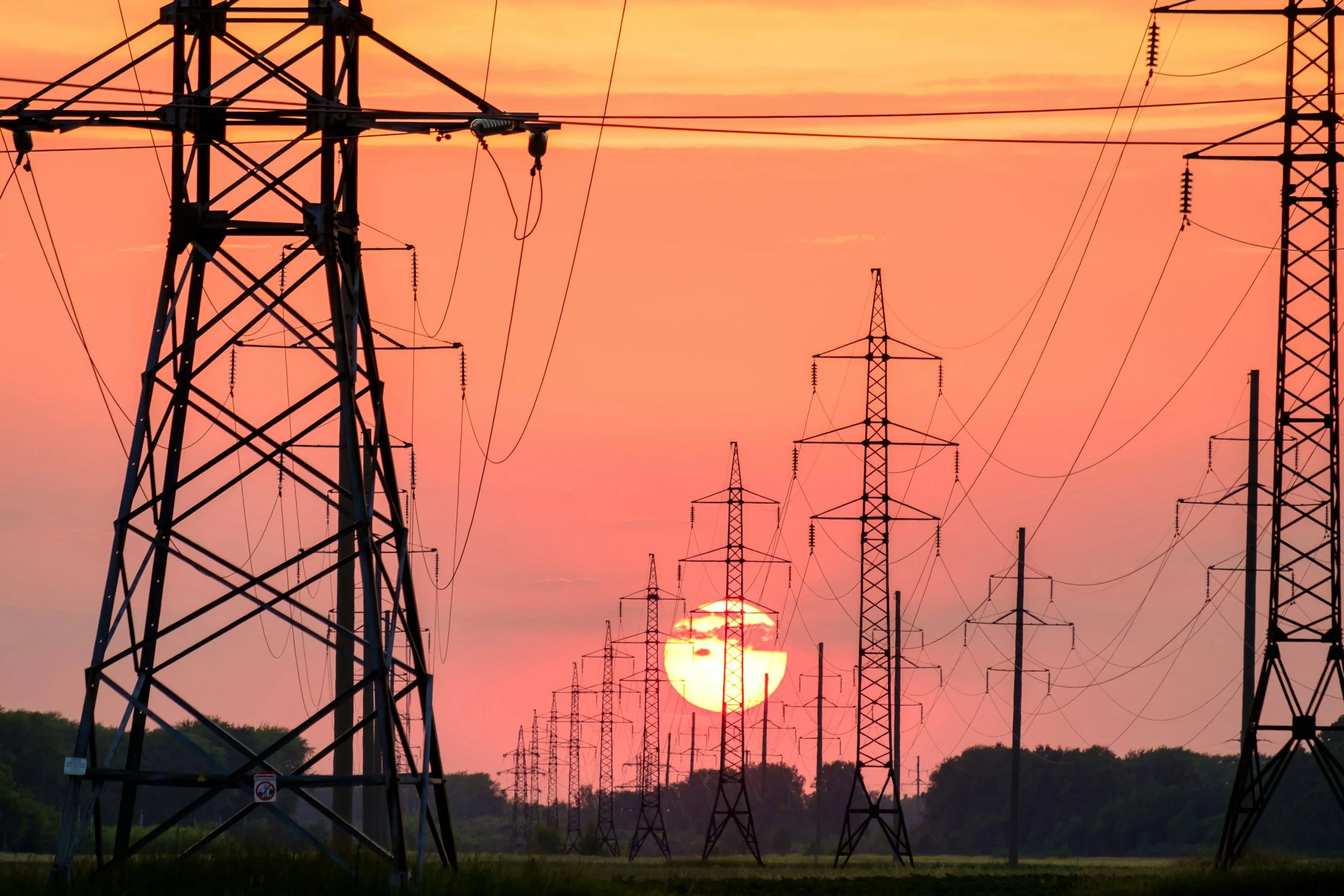
The Pattern Behind the Problems
What do the following things have in common?
A house that cost three times an annual salary in 1975 now costs ten times as much. A college education that was affordable on a summer job now requires decades of debt. Supply chains that once absorbed disruption now grind to a halt under pressure. Governments that build infrastructure now struggle to maintain it. Democracies that felt stable now feel on the edge of authoritarian drift.
These look like separate problems with separate causes, however they share a structural origin that mainstream political conversation will dare not name directly.
For most of human history, and for all of recorded industrial history until recently, the energy available to human civilization was increasing. Not just in absolute terms but also in quality, in surplus, and in how much useful work you could extract per unit invested. That surplus funded everything that has made civilization possible.
That surplus is now declining. Not catastrophically or all at once, but measurably, irreversibly, and with consequences that cascade through every system built on top of it.
It is not a policy failure, though policies have made it worse or better peripherally. It will be argued here that all of these seemingly disparate things are due to physics. And to understand it, you need three concepts:
the laws of thermodynamics
energy return on investment
what happens to any system when its energy surplus shrinks